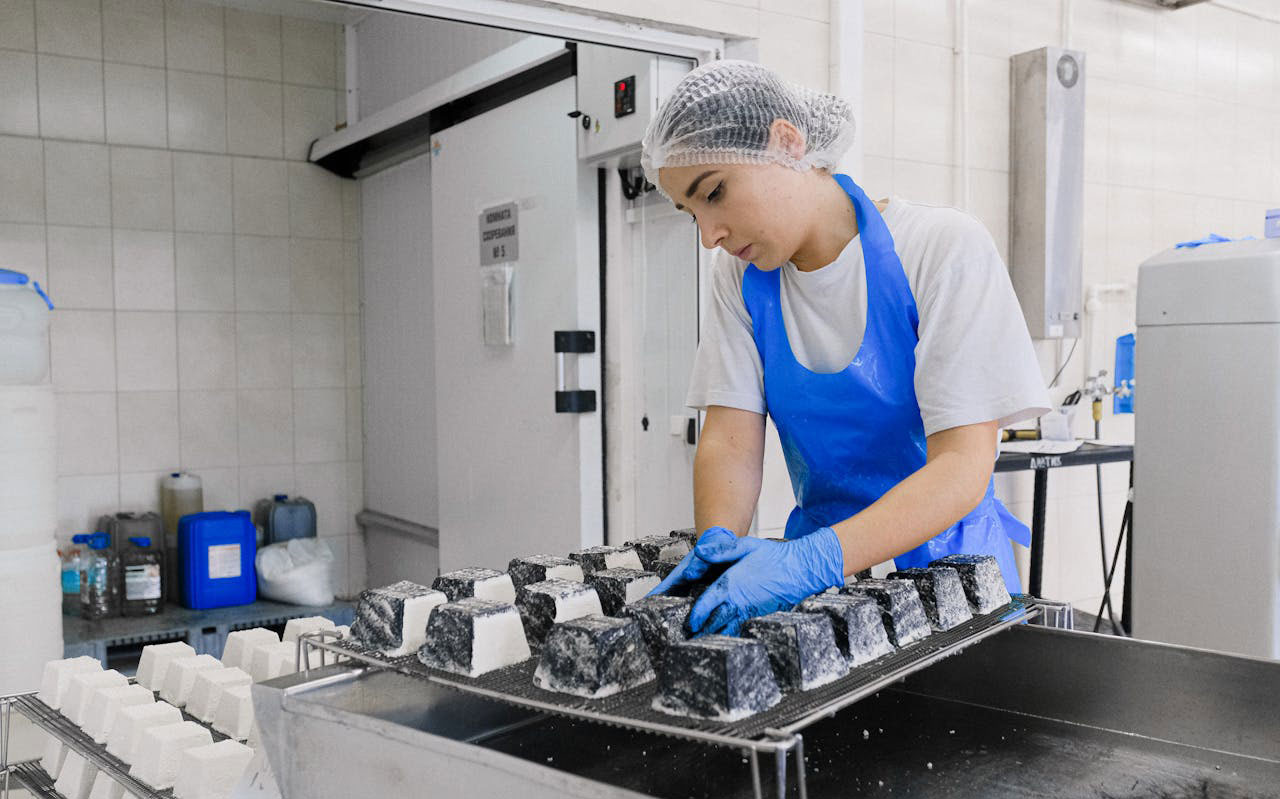
What is HACCP?
HACCP (Hazard Analysis and Critical Control Points) is a preventive food safety management system that identifies, assesses and controls food safety risks. This system prevents problems before they arise, ensuring that food is safe for consumption.
The fundamental principles of HACCP include:
- analysis of potential hazards;
- identification of critical control points;
- setting critical limits;
- systematic monitoring of critical control points;
- implementation of corrective actions;
- verifying the effectiveness of the system;
- documenting procedures and records.
Legislative requirements in Romania
The implementation of HACCP in Romania is regulated by various pieces of legislation:
Regulation (EC) No 852/2004
✅ Control and monitoring of temperature and humidity – Article 4, Annex II, Chapter I, point 2(d): food establishments must ensure that the temperature and ambient humidity are controlled, monitored and, where necessary, recorded.
✅ Adequate ventilation – Article 4, Annex II, Chapter I, point 5: establishments must have adequate ventilation systems to prevent condensation and the growth of mould.
✅ Sensors with an accuracy of ±3% are required, to be checked every 6 months.
✅ Ventilation systems must ensure 8–12 complete air changes per hour in production areas.
ANSVSA Order No. 180/2006
✅ Sets out specific requirements for humidity in the storage of products of animal origin.
✅ Meat must be stored at 85–90% relative humidity.
✅ Dairy products at 70–80% relative humidity.
European Commission Communication (2022/C 355/01)
✅ Provides flexibility in the implementation of HACCP depending on the size and specific characteristics of each establishment.
✅ Maintains the requirement for basic checks on humidity and temperature parameters.
Relevant International Standards
✅ ISO 22000:2018: Contains specific requirements for monitoring humidity as a critical parameter (Clauses 8.5.4.2 and 8.5.4.3).
✅ Codex Alimentarius: Provides specific humidity values for different food categories and correlates relative humidity (RH) with water activity (Aw).
✅ Ministry of Health Order No. 976/1998: Requires humidity to be measured and recorded at least three times within a 24-hour period.
HACCP Control Points where Moisture Control is Critical
Raw Material Reception
- Calibrated hygrometers (moisture metres) are required to check the moisture content (40–60 per cent) in dry ingredients (cereals, nuts, dried fruit).
- Fungal contamination must be prevented right from the start.
Storage
- Dry products: 50–60% relative humidity.
- Refrigerated products: 75–85% relative humidity.
- Frozen products: 90–95% relative humidity.
- Modern systems use sensors connected to control systems that automatically activate dehumidifiers when the humidity level exceeds the limits by >3%.
Thermal Processes
- Humidity of 85–95 per cent for efficient heat transfer.
- Prevention of excessive drying of products.
- Use of high-temperature-resistant probes (up to 250°C).
Product Cooling
- Humidity control between 65–75% to prevent condensation.
- Cooling tunnels with dual temperature-humidity control.
Packaging
- Humidity of 50–60% for dry products.
- Modified atmosphere packaging technologies.
- Digital monitoring with an alarm to warn of threshold exceedances.
The Influence of Humidity on Food Safety
Excessive humidity promotes the growth of harmful bacteria. For example, Salmonella and E. coli multiply rapidly when humidity exceeds 85 per cent. Listeria can form protective biofilms at humidity levels above 75 per cent, even in the fridge. Clostridium botulinum, the bacterium that produces botulinum toxin, germinates when humidity exceeds 93 per cent.
Moulds represent another major risk associated with humidity. Aspergillus flavus, which produces aflatoxins (highly toxic substances), grows best at humidity levels of 80–85 per cent. Penicillium species grow rapidly at humidity levels above 70 per cent. Research shows that for every 10 per cent increase in humidity above the safe limit, the rate at which microorganisms multiply increases by a factor of 2–5.
Toxins produced by moulds (mycotoxins) pose a real health hazard. Aflatoxins are produced most intensively at humidity levels of 85–90 per cent and temperatures of 25–30°C. Ochratoxin A forms most readily at humidity levels of 75–85 per cent. Under uncontrolled humidity conditions, concentrations of these toxins can exceed legal limits (5 micrograms per kilogram for aflatoxins) in less than 72 hours.
Humidity also affects food quality through physico-chemical processes. Fats oxidise more rapidly at both excessively low humidity (below 30 per cent) and excessively high humidity (above 70 per cent). Water-soluble vitamins, such as vitamin C and the B vitamins, degrade 15–30 per cent faster when humidity fluctuates. An increase in humidity of just 10 per cent above the optimum level can double the activity of enzymes that cause food to spoil.
Incorrect humidity levels also affect finished products. Bread and crispbread can absorb 3–5 per cent water from the atmosphere at humidity levels above 65 per cent, losing their characteristic texture. Freeze-dried products reabsorb moisture when humidity exceeds 40 per cent, reducing their shelf life by 30–50 per cent.
The role of dehumidifiers in various industries
The Meat and Meat Products Industry
In the meat processing industry, humidity control is vital at numerous stages of production. Cold stores require relative humidity to be maintained between 85–90 per cent to prevent fresh meat from drying out, thereby avoiding weight loss of up to 2–3 per cent per day. For matured products, such as dry-cured salami, a dynamic humidity profile is required, starting at 90–95 per cent humidity and gradually decreasing to 65–70 per cent over a period of 30–90 days.
✅ Texco’s recommendation: Condair DA 500–4000 desiccant dehumidifiers are ideal for this industry, offering precise humidity control even at low temperatures. Models with capacities ranging from 3.3 kg/h to 20 kg/h allow for adaptation to different sizes of processing chambers. The non-flammable, silicone-free desiccant rotor ensures the safety required in the food industry, whilst energy-saving regeneration systems reduce operational costs.
For very low temperatures, the Condair DC-LT series of industrial dehumidifiers is specially designed to operate efficiently at temperatures as low as 1°C, maintaining the optimum humidity level in cold stores. Dehumidification capacities range from 46.7 l/24h at 5°C up to 246.1 l/24h for the larger models.
Dairy Industry
The production of matured cheeses requires extremely precise humidity control. Camembert cheese, for example, requires 90–95% humidity during the first 10 days for the development of the Penicillium camemberti mould, after which the humidity must be reduced to 85–88%. Fluctuations of just 3–5 per cent can dramatically affect the quality of the final product.
✅ Texco’s recommendation: Condair DC industrial condensation dehumidifiers are ideal for cheese ripening rooms, as they ensure controllable humidity down to 45 per cent. The DC 75–200 models offer capacities ranging from 34.5 to 90.6 l/24h at 20°C and 60% RH, and are fitted with hot-gas defrosting systems for efficient operation at low temperatures. Microprocessor-based electronic control enables precise monitoring of parameters, whilst the hot-dip galvanised casing ensures durability in dairy production environments, which are often aggressive due to their salt content and bacterial cultures.
Technical advantage. The optional PLC system with touchscreen allows variable humidity profiles to be set for different types of cheese, with automatic data logging for traceability and HACCP documentation.
Storage and Logistics of Perishable Products
The storage of fruit and vegetables presents specific challenges, with varying humidity requirements: apples require 90–95% RH, onions 65–70% RH, and potatoes 85–90% RH. One problematic phenomenon is ‘product sweating’, which occurs when refrigerated produce is suddenly exposed to higher temperatures.
✅ Texco’s recommendation: Condair’s DC series of condensation dehumidifiers, featuring models such as the DC 270–950, offer high air handling capacities of up to 8,500 m³/h, ideal for large storage spaces. These units can be connected to duct networks for optimal distribution of dehumidified air, ensuring uniform conditions throughout the space.
For transit areas between zones with different temperatures, the Condair DC-N range of dehumidifiers with remote heat dissipation is ideal, as it avoids additional heating of the space. The sensible cooling capacity of 4.48–15.5 kW enables the temperature to be maintained at a constant level during the dehumidification process.
Specific technical advantage. The DC 750–950 models can handle large air volumes (7,000–8,500 m³/h) with an available external pressure of 50–150 Pa, making them perfect for air distribution systems in industrial-scale warehouses.
Industrial Kitchens and Restaurants
Industrial kitchens generate large quantities of vapour in cooking areas, requiring efficient moisture extraction to prevent condensation on surfaces. Cold food preparation areas benefit from humidity controlled at 50–60% to prolong the freshness of ingredients.
✅ Texco’s recommendation: The DC-W wall-mounted dehumidifiers (50W–200W models) and DC-C ceiling-mounted units (50C–200C) are discreet and efficient solutions for restaurants and kitchens, offering flexibility in installation. With low noise levels (47–54 dB(A) for the DC-W series), they are ideal for busy spaces where customer comfort is part of the dining experience.
For refrigerated display cabinets, the compact, rear-mounted DC-R dehumidifiers ensure moisture is removed without compromising the aesthetic appeal of the space. Capacities ranging from 17.3–60.9 l/24h at 10°C and 70% RH perfectly meet the requirements of display cabinets for desserts and sensitive products.
Specific technical advantage. The microprocessor-based control system allows integration with existing building management systems (BMS), providing remote monitoring and an alarm should critical thresholds be exceeded.
Pharmaceutical and Dietary Supplements Industry
In pharmaceutical manufacturing, humidity control is critical. Tablets and capsules can absorb 2–5 per cent of their weight in water when exposed to high humidity, reducing their shelf life by up to 50 per cent. Probiotic supplements require humidity levels below 20% RH to prevent premature activation of bacterial cultures.
✅ Texco’s recommendation: DA desiccant dehumidifiers are essential for the pharmaceutical industry, as they are capable of reducing humidity to very low levels. The DA 440–1000 models offer drying capacities of 1.4–7.1 kg/h and can operate efficiently at temperatures as low as –30°C, making them ideal for humidity-controlled production rooms.
For pharmaceutical storage areas, the DC series, with precise humidity control and operating temperatures between 5–36°C, ensures optimal storage conditions for medicines and raw materials. The robust, double-walled, insulated casing (on larger models) prevents condensation on the external surfaces of the equipment, thereby avoiding secondary contamination.
Specific technical advantage. The desiccant rotor used in the DA series consists of a honeycomb structure made of optical fibre coated with hygroscopic silica gel, creating a maximum surface area for moisture absorption, with efficiency far superior to that of conventional condensation-based dehumidification systems.
The Packaging and Materials Sector
Packaging materials are directly affected by humidity. Cardboard can absorb up to 10 per cent of its weight in water when exposed to high humidity (>70 per cent RH), losing up to 50 per cent of its mechanical strength. Self-adhesive labels and biodegradable packaging are particularly sensitive to fluctuations in humidity.
✅ Texco’s recommendation: For packaging production and storage areas, the DC 150–950 dehumidifiers provide precise humidity control between 40–99% RH, preventing material degradation. The robust, hot-dip galvanised construction provides protection against the harsh environmental conditions often found in packaging factories.
For printing areas, where humidity uniformity is essential for print quality, DC condensation dehumidifiers with capacities ranging from 73–939 l/24h at 30°C and 80% RH ensure the stability of the printing process. The option to connect to ventilation ducts allows for the uniform distribution of dehumidified air throughout the production area.
Specific technical advantage. The energy-efficient EC fans integrated into the DC units reduce energy consumption by up to 30 per cent compared with conventional fans, offering precise control of air flow according to current requirements.
By implementing the dehumidification solutions recommended by Texco, companies in the food, pharmaceutical and packaging industries can ensure compliance with HACCP standards, whilst simultaneously improving product quality, shelf life and operational efficiency.
Humidifiers for HACCP Applications in the Food Industry
Humidity control is a critical factor in the food industry, having a direct impact on product safety, quality, shelf life and compliance with HACCP standards. Various processes within the food industry require specific solutions not only for dehumidification but also for humidification, naturally tailored to the particular requirements of each sector.
Condair EL Humidifier (electrode type)
The Condair EL industrial humidifier offers a reliable and hygienic solution for applications requiring sterile steam. Thanks to its easily replaceable steam cylinder and self-adaptive algorithm for precise humidity control, this system is ideal for:
- The meat industry: In processing rooms to maintain the optimum humidity level (50–60%), which prevents excessive drying of products and weight loss.
- Bakery industry: For humidity control in proving chambers, where the correct humidity balance (75–85 per cent) is essential for the quality of baked goods.
- Pharmaceutical warehouses: To maintain the constant conditions required for the storage of medicines and food supplements.
Its operation using standard tap water and variable capacities (1–91 kg/hour) make this humidifier a versatile solution that can be easily adapted to different operations.
Condair RS Humidifier (high-precision)
The Condair RS high-precision humidifier is the preferred solution for applications requiring extremely precise humidity values. With its advanced data monitoring and recording functionality, this system is ideal for:
- Food testing laboratories, where precise humidity control is required for quality and safety testing.
- Chocolate and confectionery production, where fluctuations in humidity can affect the texture, appearance and shelf life of products.
- Maturing rooms for premium cheeses, where specific humidity profiles must be maintained with precision to ensure unique characteristics relating to taste, smell, colour and appearance.
The limescale collection tank simplifies maintenance, reducing downtime and operational costs – essential factors in the continuous operations typical of the food industry.
Condair GS Humidifier (gas-fired)
The Condair GS gas humidifier uses natural gas to produce steam, offering a cost-effective and environmentally friendly alternative for applications requiring high humidification volumes:
- Large storage rooms for fruit and vegetables, where controlled humidity extends freshness and reduces wastage.
- Meat processing facilities for large-scale cold stores, where the correct humidity prevents product weight loss.
- Dairy plants for production areas where constant conditions must be maintained to ensure product quality.
The waste heat recovery system from exhaust gases improves energy efficiency, reducing operational costs, which can be significant in large-scale operations.
Condair DL Humidifier (with atomisation and evaporation)
The Condair DL hybrid system combines atomisation and evaporation to provide aerosol-free humidification, an essential feature for applications requiring maximum hygiene:
- Fruit and vegetable processing lines, where controlled humidity is required to prevent dehydration, but without introducing excessive moisture that could encourage the growth of microorganisms.
- Fresh produce packing areas, where humidity control extends the shelf life of products without introducing contamination risks.
- Production areas for sensitive foods, where products are vulnerable to contamination from water droplets.
HygienePlus® technology with silver ionisation ensures effective water sterilisation, reducing microbiological risks and helping to ensure compliance with HACCP standards.
Condair ME Evaporative Cooler
The Condair ME industrial evaporative humidifier provides both humidification and evaporative cooling, offering an energy-efficient solution for:
- Heat-generating production areas, such as industrial kitchens and baking areas, where evaporative cooling reduces the ambient temperature, thereby improving working conditions.
- Storage facilities for temperature-sensitive products, where maintaining a low temperature is essential for preserving product quality.
- Meat processing units, where optimal temperature and humidity are critical for preventing contamination and maintaining product quality.
Removable evaporator coils allow for easy maintenance and reduced downtime, which are very important in continuous food industry operations.
Outdoor Installation Applications
The Condair EL-OC, RS-OC and GS-OC humidifier models are specifically designed for outdoor installation, providing solutions for facilities with limited indoor space:
- Compact processing units, where internal space is prioritised for production equipment.
- Cold storage facilities, where outdoor installation allows for the maximisation of storage space.
- Seasonal or temporary operations, where flexibility in equipment placement is essential.
Weather-resistant enclosures ensure reliable operation in all weather conditions, providing greater freedom in the planning and organisation of production facilities.
DRAABE Systems for Specific Applications
For applications requiring fine atomisation and maximum hygiene, DRAABE systems offer complementary solutions:
- DRAABE TurboFogNeo, ideal for the textile industry, printing works and tobacco production, where precise humidity control is essential for process quality.
- DRAABE BioSafe, perfect for applications requiring strict hygiene standards, such as pharmaceutical laboratories and food supplement production facilities.
These systems are designed with a particular focus on hygiene, featuring stainless steel components and automatic cleaning systems that reduce the risk of bacterial contamination.
Jetspray Solutions for Demanding Industrial Environments
Condair’s Jetspray system provides humidification for challenging industrial environments:
- Cold stores, where humidification is required at low temperatures to prevent product dehydration.
- High-dust processing areas, such as flour mills and cereal processing plants, where conventional humidification systems can be affected by airborne particles.
- Slaughterhouses and meat processing plants, where resistance to harsh environments and strict hygiene requirements are vital.
Precision-engineered nozzles, backed by a 10-year warranty, and self-cleaning capability ensure reliable operation in demanding industrial environments.
Benefits for HACCP Compliance
The implementation of these systems in the food industry brings multiple benefits for ensuring compliance with HACCP standards:
✅ Precise control of critical control points: the systems enable the monitoring and control of humidity as a critical parameter in many food processes.
✅ Traceability and data logging: advanced data monitoring and logging functions provide the necessary documentation for HACCP audits.
✅ Reduction of microbiological risks: sterilisation and sanitisation technologies reduce the risk of microbial contamination.
✅ Preventative maintenance: comprehensive service systems and self-cleaning features reduce the risks associated with inadequate maintenance.
✅ Adaptability to specific requirements: the range of available systems allows you to select the optimal solution for each specific application, ensuring compliance with the particular requirements of each process.
By choosing the right humidification system for each specific application, you will ensure not only compliance with HACCP standards, but also process optimisation, improved product quality and reduced operating costs.
As we understand all aspects relating to the interaction between humidity control and compliance with HACCP standards, product quality, and ensuring optimal production conditions, we can help you plan and implement the right technical solutions to meet the specific requirements of your business.
For personalised advice and to select the best equipment, please do not hesitate to contact the experts at Texco on ☎️ 0736 369 802 or at office@texco.ro!