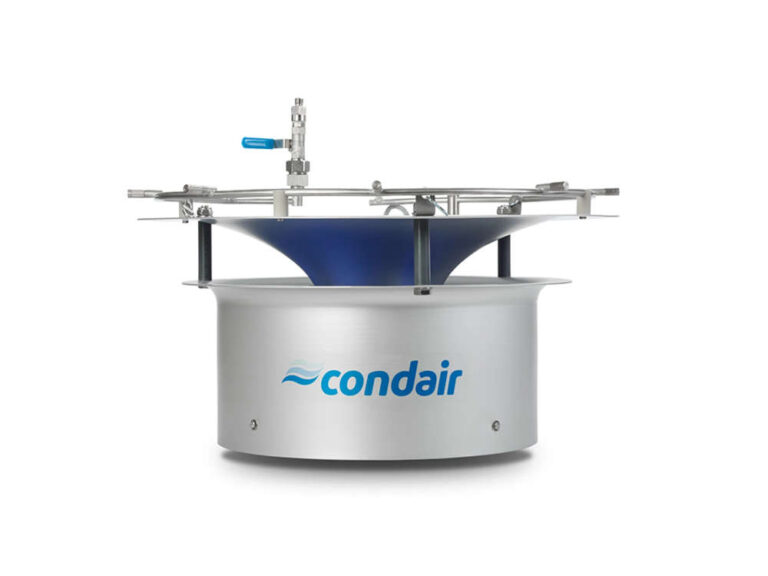
Humidification system Condair Vita Space
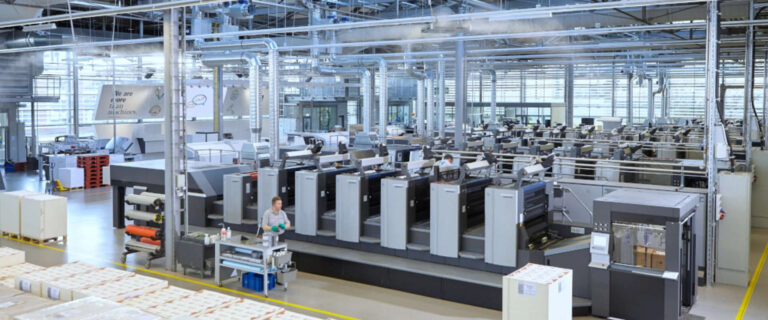
High-capacity system for direct humidification and evaporative cooling of large pressrooms and label production halls.
Paper and board absorb or release moisture depending on the conditions in the pressroom. Microclimate variations change the dimensions of the sheet, encourage static electricity and can affect correct feeding of the material into the press.
Requirements differ from one process to another. In offset printing, the dimensional stability and flatness of the paper influence feeding and colour register, while in digital printing electrostatic charge can cause problems when feeding and handling the substrate. Storing paper and board likewise requires stable conditions for the duration of storage.
Label production uses a range of substrates, from paper and board to plastic films, synthetic materials and self-adhesive constructions. Paper responds to humidity variations with dimensional changes, while films and other poorly conductive materials can build up electrostatic charge during unwinding, printing, slitting and rewinding.
Texco supplies Condair systems for humidification and dehumidification in print shops and production areas where microclimate stability influences the behaviour of paper, board, films and other printing substrates.
Paper changes its dimensions along with variations in air humidity. Humidity variations alter the paper’s moisture equilibrium and, with it, the dimensions and flatness of the sheet. Both excessively dry air and excessive humidity can encourage feeding problems and paper distortion. The target value is set according to the type of paper, the grammage and the printing technology used.
At low humidity, sheets of paper can stick to each other or to the metal components of the machine, which leads to jams and line stoppages. Controlled humidity reduces the build-up of electrostatic charge and complements the ionisation devices fitted directly on the equipment.
A difference in moisture between the two sides of the sheet, arising before or after printing, produces curl and affects the flatness of the material as it leaves the machine. Maintaining stable humidity in the production hall reduces this risk and can limit the losses caused by distorted sheets or incorrect feeding.
The condition of the paper at the moment of printing influences how the material behaves and, depending on the process and the substrate, can affect print consistency. Humidity variations between batches can contribute to differences in appearance and colour reproduction.
Labels can be printed on paper, board, plastic films, synthetic materials or self-adhesive constructions, and the microclimate requirements differ according to the substrate and the printing technology. With films and other poorly conductive materials, friction and layer separation during unwinding, printing, slitting and rewinding can generate electrostatic charge, which encourages dust attraction, incorrect feeding and unstable positioning of the material. Humidity control complements the local earthing and ionisation measures without replacing them.
Paper and board can absorb or release moisture during storage, which affects flatness, strength and subsequent behaviour on press. Storage conditions are set according to the material and the requirements of the following process.
In print shops producing packaging for the food or pharmaceutical industry, the hygiene requirements applicable to the process can also influence how the humidification system is configured. Water quality and treatment, avoiding stagnation, monitoring of the installation and the cleaning and maintenance procedures must all be assessed according to the technology used and the requirements of the project.
High-capacity system for direct humidification and evaporative cooling of large pressrooms and label production halls.
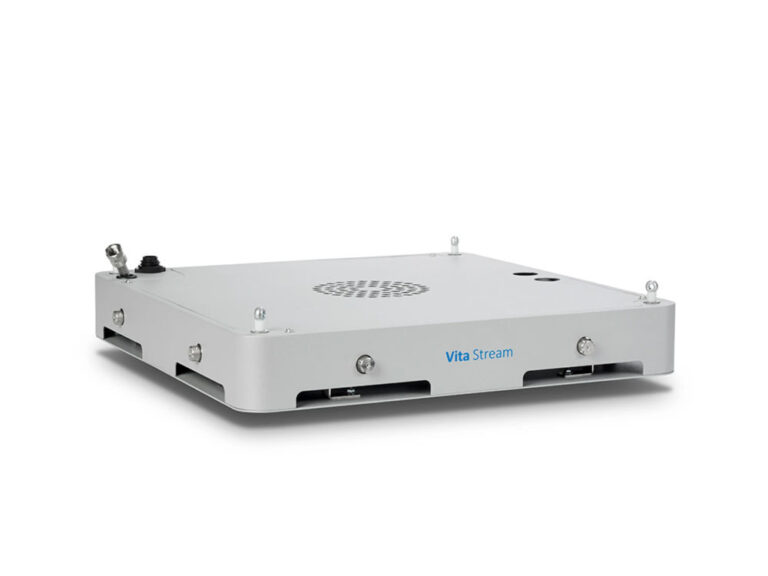
Modular high-pressure system whose capacity can be adapted by configuring the number of nozzles and the areas served.
High-pressure system with ceiling mounting, for distributing humidity in printing and production halls with high ceilings.
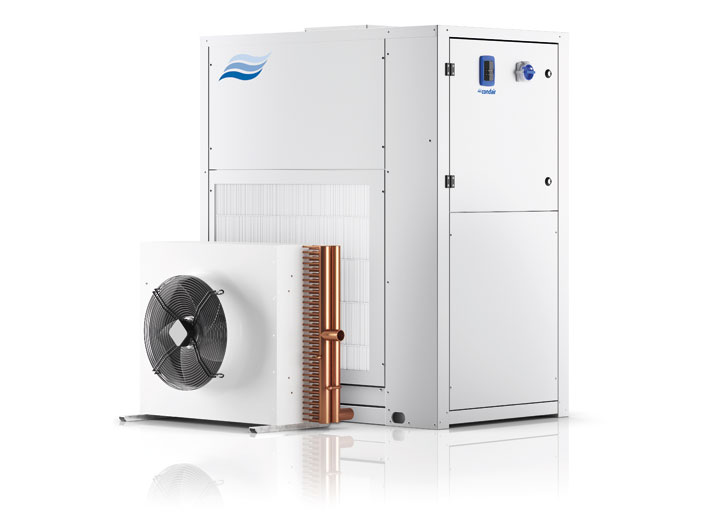
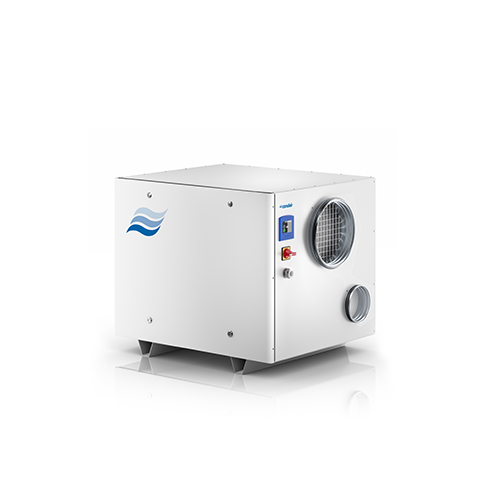
Condensation dehumidification system, with air distribution directly into the room or through ductwork, for spaces where humidity needs to be reduced and kept under control
Desiccant dehumidifier for stores and production areas that need low and stable humidity to be maintained.
If you’d like to explore the right options for your business, our experts are here to provide clear recommendations and solutions tailored to your needs.
Schedule a phone call or get in touch by email – it’s simple and free.
For humidification, Texco analyses the pressroom, the types of substrate used, the printing technology, the production volume and the critical areas of feeding, printing, slitting, rewinding and storage. In label production, poorly conductive materials and the points where electrostatic charge can arise are checked separately.
For dehumidification, the analysis covers the areas where excessive humidity or condensation can affect the materials, the printing process or the storage conditions.
For humidification systems, the analysis covers the volume of the space, the air changes, the temperature, the initial humidity and the target value, the operating regime and the distribution needed in each area.
For dehumidification, the same parameters are taken into account, together with the sources of moisture, the working temperature and the level that must be maintained in that space.
Humidification systems are configured for direct distribution in the areas set by the design, while dehumidification equipment is positioned or connected through ductwork according to the configuration of the space. Commissioning includes setting the parameters and checking air distribution in the critical areas.
Texco supplies the available technical documentation, the configuration parameters and the information needed to install, operate and maintain the equipment included in the project.
The analysis covers the volume of the space, the air changes, the existing temperature and humidity, the target value, the operating schedule of the hall, the type of paper or board and the printing technology used.
Yes. The conditions needed in the printing area are set according to the process and how the material behaves in the machine, while the store is assessed according to the materials held, the length of storage and the existing conditions. The two areas may require different solutions and settings.
Controlled humidity reduces the build-up of electrostatic charge and contributes to stable feeding and handling of the substrates. With paper and board it also limits dimensional variations, and for plastic films and other poorly conductive materials it complements the local ionisation and earthing measures.
The temperature and humidity in the space, the air changes, the sources of moisture and the conditions the stored material requires are all checked. Dehumidification is sized when the existing conditions exceed the humidity level targeted for that space.
Adiabatic systems absorb heat from the air as the water evaporates and can help reduce the temperature while controlling humidity. The effect depends on the initial temperature and humidity, the air flow rate and the capacity of the system, and it does not automatically replace a cooling installation.
Yes. The project can cover the whole hall or a specific area, such as press feeding, the production floor or the paper store. The solution is determined after analysing the area and the parameters that need to be controlled.
Our technical experts will get back to you within 4 business hours.
Send us an email and get in touch with our specialists.
Call the numbers below to request a quote or get answers to your questions.
Fill out the form and we'll get back to you with a personalized offer.
Write to us and we will respond as soon as possible.