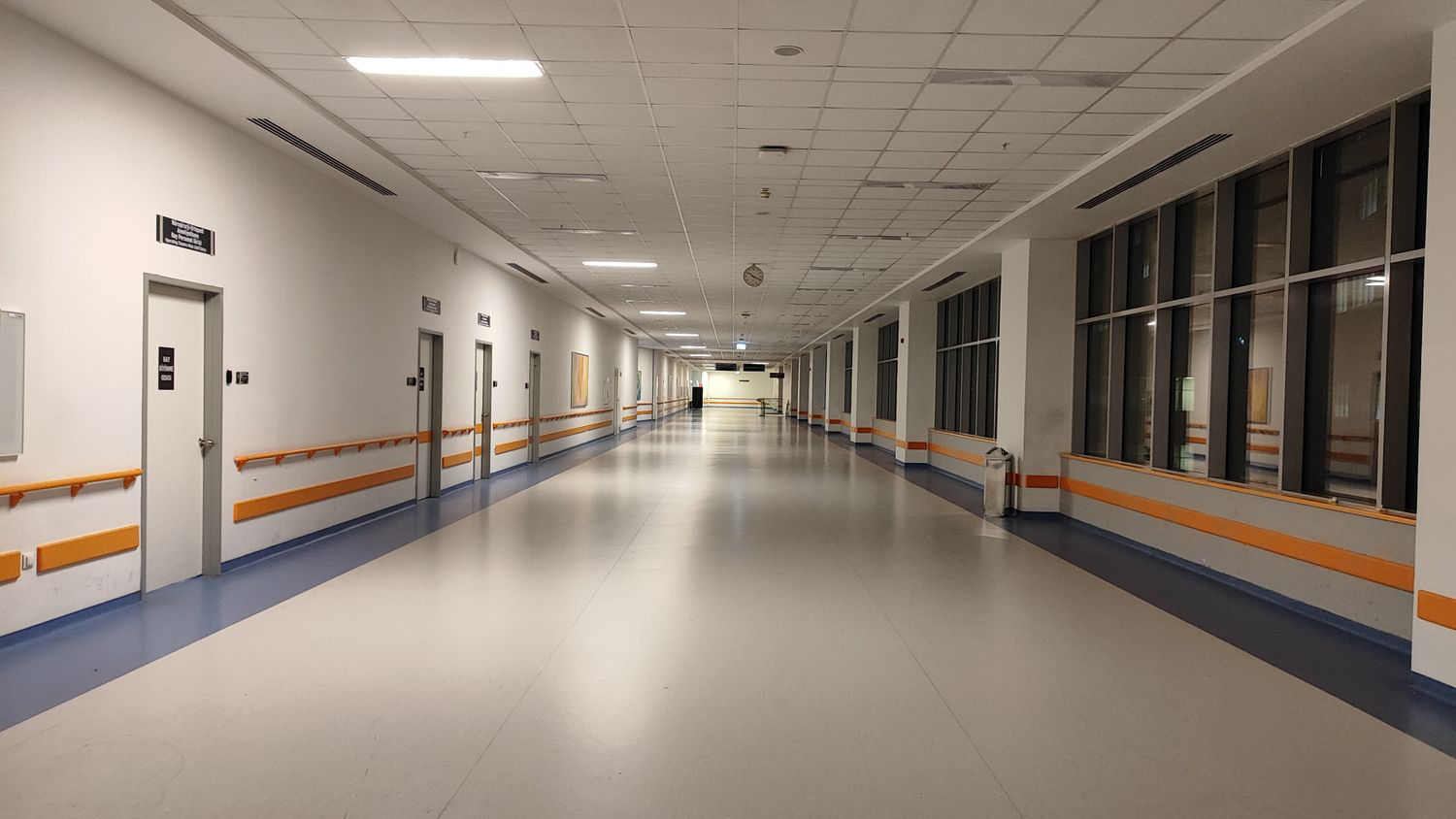
A humidification system introduces a controlled amount of water into the air flow, in the form of steam or very fine droplets that evaporate. The water passes from the source through the humidification equipment, the distribution system and the pipework before the treated air reaches the room.
Hygiene depends on the entire route. Water quality, condensate drainage, system drainage during shutdowns, sensor positioning and access for cleaning are all established at the design stage.
The temperature and humidity requirements for operating theatres, intensive care units (ICUs) and wards for patients with severe burns are set out in the article on humidity control in critical hospital areas. Below, we explain how the system that generates and distributes humidity should be designed and operated.
What does hygienic humidification mean in a hospital?
NP 015-2022 requires that ventilation, air-conditioning and climate control equipment comply with quality requirements regarding hygienic construction. These requirements must be verified when selecting the equipment, prior to installation.
For the entire system, the following must be analysed:
- the water source and water quality;
- water treatment;
- humidification technology;
- the method by which steam or water is distributed into the air;
- the distance required for absorption;
- drainage of condensate and water resulting from operation;
- draining the system during shutdowns;
- the position of the sensors;
- monitoring of readings and alarms;
- access for cleaning and servicing.
Suitable equipment operates effectively when all these elements are designed in conjunction with one another.
Water quality is determined by the technology
Water affects the equipment’s service life, the frequency of servicing and the quality of the humidification process.
Before choosing a solution, the following must be known:
- the water source, whether from the mains or a private supply;
- hardness, i.e. the level of salts that cause limescale;
- conductivity, for technologies where this value affects operation;
- any treatments already in place in the building;
- the available flow rate and pressure;
- the manufacturer’s requirements for the feed water.
Mains water
Mains water can supply certain steam generators, within the hardness and conductivity limits specified by the manufacturer.
A higher limescale content leads to faster deposits on heated components. The equipment will require more frequent cleaning, and parts that come into contact with the water may need to be replaced sooner.
Softened water
Water softening reduces the amount of calcium and magnesium that form limescale deposits. The process helps to protect the equipment, but retains a large proportion of the salts dissolved in the water.
For this reason, softened water may be suitable for some steam generators, whilst adiabatic systems generally require a higher level of treatment.
Water demineralised by reverse osmosis
Reverse osmosis passes water through a membrane that retains most of the dissolved salts. The result is water with a very low mineral content.
Adiabatic solutions use demineralised water because the water is atomised into the air stream. Any salts remaining in the atomised water can form particles and deposits on the system’s components.
The Condair DL, for example, is supplied with demineralised water, usually obtained via a reverse osmosis system sized to match the system’s capacity.
Choosing the right water reduces scale build-up, maintains equipment performance and simplifies long-term maintenance.
How should water be managed during shutdowns?
Water that remains stationary in pipes, tanks or other components promotes the growth of microorganisms and the formation of biofilm over time.
Biofilm is a layer of microorganisms attached to a damp surface. Its adhesion means that simply rinsing it off has a limited effect, and removal may require mechanical cleaning or special sanitisation procedures.
The risk of stagnation arises particularly in:
- systems that operate only during certain periods;
- areas that are shut down overnight;
- equipment temporarily taken out of service for maintenance;
- sections or rooms used occasionally;
- long periods between installation and commissioning.
The design must specify:
- how the system is completely drained;
- whether the equipment has automatic draining, flushing or recirculation cycles;
- how to prevent water from remaining in the system;
- what procedure is followed after a long shutdown;
- what checks are carried out before restarting;
- when sanitisation is required.
For a routine shutdown, the automation system can coordinate the shutdown of steam or water production, the draining of components and a controlled restart. After a long period of inactivity, the system may require inspection, cleaning, the replacement of certain consumables and a check on water quality.
These procedures are determined by the technology, the duration of the shutdowns and the requirements of the area being served.
Absorption, condensation and drainage
Water introduced into the air stream requires time and space to be fully absorbed. The required length between the point of introduction and the first obstruction in the pipework is called the absorption distance.
This distance depends on:
- the capacity of the humidification system;
- the air temperature;
- the air humidity prior to humidification;
- air velocity;
- the shape and size of the pipework;
- type of distribution system;
- the position of downstream components.
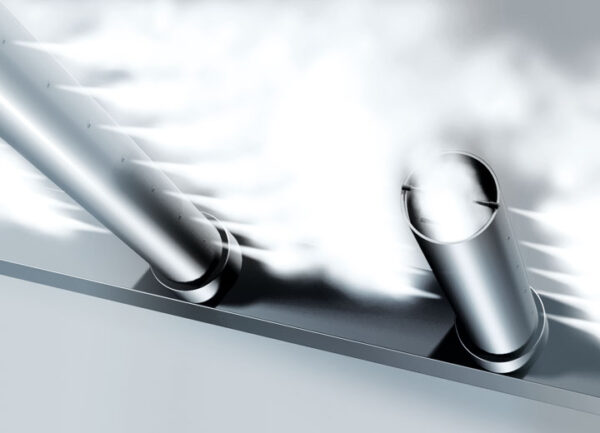
In steam humidification, distribution is achieved via a set of perforated pipes installed in the air stream. Their position and number are determined according to the flow rate and the size of the pipework.
The steam must be absorbed before it encounters:
- an elbow;
- a damper;
- a heating or cooling coil;
- a sensor;
- a noise attenuator;
- a filter.
Contact with a surface before complete absorption can cause condensation.
Why is condensation a concern in healthcare settings?
In operating theatres and other rooms with high standards of asepsis, the air passes through several stages of filtration. The final stage uses very fine HEPA or ULPA filters, fitted as close as possible to the inlets through which air enters the room.
Condensation reaching the final filter can impair its performance and may necessitate its replacement. Persistent moisture in the pipework can also encourage the formation of deposits or biofilm.
The absorption distance is calculated during the design phase, when the position of the equipment and the route of the pipework can still be adjusted.
How is the drainage system designed?
The drainage system must handle:
- water discharged during emptying;
- water resulting from cleaning cycles;
- condensate;
- water remaining from the adiabatic process;
- water discharged by the reverse osmosis system.
For steam generators, the discharged water may be at a high temperature. Pipes, connections and the discharge point must be capable of withstanding the temperature and flow rate specified by the manufacturer.
The route must allow for complete drainage and avoid areas where water may accumulate.
Maintenance access must be considered at the design stage
Even correctly sized equipment can become difficult and costly to operate when access for servicing is limited.
Before finalising the location, the following must be checked:
- how the technician will reach the equipment;
- how much space is available around the equipment for opening and dismantling components;
- how cylinders, filters, pumps or tanks are removed;
- where cleaning takes place;
- how water is drained during the work;
- what consumables the technology uses;
- how often maintenance is required;
- how long the shutdown lasts;
- how the area remains operational during maintenance.
For ICUs and other areas requiring continuous operation, the design may include backup equipment or capacity. In this way, one part of the system can be taken out of service whilst the other continues to provide humidification.
Access must be designed according to the actual dimensions of the equipment and the maintenance operations specified by the manufacturer. A simple access hatch may be insufficient for removing bulky components.
Sensors, control and monitoring
Sensors measure humidity and transmit the information to the control system. The equipment adjusts steam production or water flow according to the measured value.
Sensors can be installed:
- in the room;
- in the inlet pipework;
- in the exhaust pipework;
- at several points, where the design requires additional checks.
Their position affects the accuracy of the measurement and the system’s response time. A sensor fitted too close to the inlet may measure air that is still in the process of being mixed. A sensor located in an area with low air circulation may only reflect local conditions.
The HVAC designer, the automation specialist and the equipment supplier must jointly determine:
- the target humidity value;
- the acceptable ranges;
- the position and type of sensors;
- the system’s response time;
- the alarm thresholds;
- operational and fault signals;
- values displayed in the building management system;
- data to be retained in the history log;
- the behaviour of the humidifier when the air-handling unit is switched off.
Monitoring may include measured humidity, commands sent to the equipment, capacity utilised, operating status, alarms, service requirements and drainage cycles.
Keeping a history helps to verify parameters, identify variations and analyse any alarms that occur during operation.
Steam humidification or adiabatic humidification?
There are two main methods of introducing humidity into the air.
Steam humidification heats water until it turns to vapour and distributes the steam into the air stream.
Adiabatic humidification involves atomising water into very fine droplets or allowing it to evaporate from a wet surface. The process extracts heat from the air and also produces a cooling effect.
For critical areas, NP 015-2022 includes steam humidification as part of the centralised system and prohibits humidification by water spraying in air conditioning and climate control systems. The specific solution is determined in the design, depending on the function of the area and all applicable provisions.
For the other areas of the hospital, the design shall comply with standard I5 and the corresponding environmental category.
Criterion | Steam humidification | Adiabatic humidification |
How water enters the air | Water is heated until it turns into steam | Water is atomised into a very fine mist or evaporated from a wet surface |
Water quality | Requirements depend on the steam generation technology and the manufacturer's limits | Usually uses water demineralised by reverse osmosis |
Energy consumption | Includes the energy needed to heat and vaporise the water | Uses thermal energy from the air and produces evaporative cooling |
Space requirements | Requires space for steam distribution and absorption | Requires space for spraying, evaporation and separation of residual water |
Capacity control | Allows fast and precise control, depending on the equipment | The control method depends on the equipment and nozzle configuration |
Drainage | Handles water from draining, cleaning and condensate | Handles residual process water and reject water from reverse osmosis treatment |
Maintenance | Focuses on steam generation and distribution components | Focuses on nozzles, evaporator, pumps and water treatment |
Use in hospitals | The solution specified by NP 015-2022 for the central system serving critical areas | Can be considered for areas where the applicable standard and project requirements allow this technology |
What solutions can be considered?
Condair ESCO utilises the steam available in the building’s network. The system controls and distributes the steam into the air stream. The choice depends on the pressure, quality and availability of the existing steam.
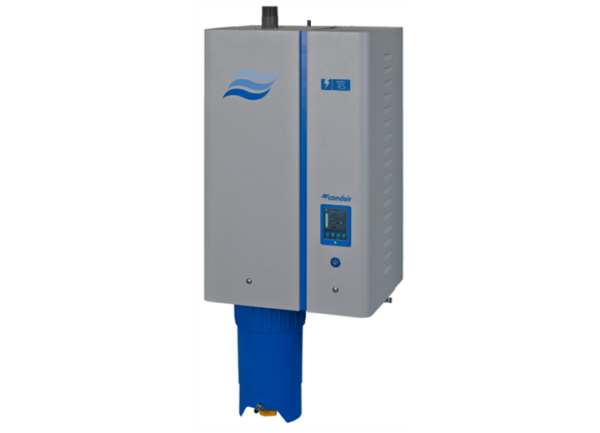
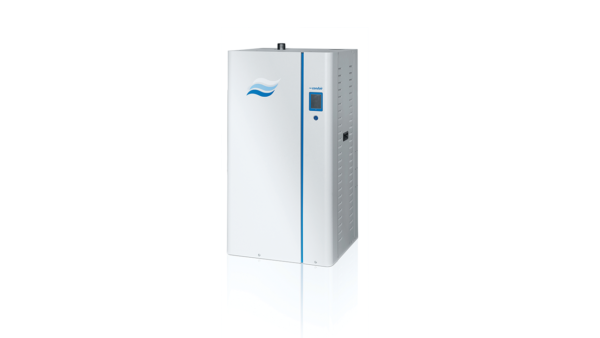
Condair RS produces steam by heating it with electric heating elements. The unit can serve a specific area or air handling unit, depending on the calculated capacity and the available electrical power.
Condair GS produces steam by burning gas. This solution may be considered for high-capacity applications or for projects where the energy source favours the use of gas.
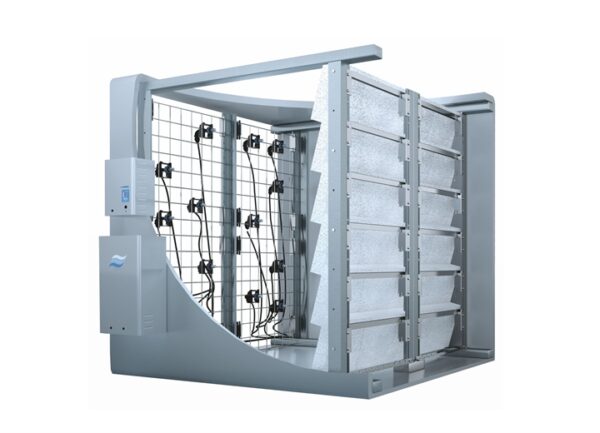
Condair DL utilises adiabatic humidification. Demineralised water is sprayed at low pressure, whilst the ceramic evaporator retains the remaining water and facilitates its evaporation. This solution is suitable for areas where project requirements and applicable regulations permit adiabatic humidification.
- Humidification & dehumidification
- Humidification & dehumidification
- Humidification & dehumidification
- Humidification & dehumidification
The final choice depends on the room’s function, the required capacity, the availability of water, energy sources, installation space, operating schedule and hygiene requirements.
What information should the supplier be provided with?
The following are required for system sizing and configuration:
- the function of each room;
- the design temperature and relative humidity;
- air flow rate;
- the proportion of outdoor air;
- design outdoor conditions;
- operating schedule;
- the configuration of the air-handling unit and ductwork;
- the position of filters and downstream components;
- space available for distribution and absorption;
- water source and quality;
- the water treatment applied;
- water flow rate and pressure;
- available energy sources;
- the route and materials of the drainage system;
- the shutdown procedure for the area;
- drainage and restart requirements;
- space available for servicing;
- the values, alarms and data to be monitored;
- continuity and redundancy requirements;
- project stage: design, construction or modernisation.
This information enables the selection of technology, capacity calculation and verification of integration into the HVAC system.
How does TEXCO get involved in a hospital humidification project?
TEXCO analyses the project data, calculates the humidification requirements and selects the appropriate Condair configuration.
The team can provide:
- verification of design parameters;
- system sizing;
- selection of technology;
- verification of the water quality required by the equipment;
- analysis of the space required for installation and heat absorption;
- verification of drainage and energy requirements;
- support for integration into the HVAC system;
- technical documentation;
- commissioning;
- equipment configuration;
- ongoing technical support.
TEXCO has supplied Condair humidification systems to a paediatric hospital in Bucharest.
Frequently asked questions
Can a humidification system be added to an existing HVAC installation?
Yes. The assessment starts with the airflow, available space, absorption distance, filter position, available water and power supply, drainage and control system. The results show which technology can be integrated and what adjustments are needed.
What should be checked before restarting the system after a long shutdown?
The inspection may cover the condition of the components, cleaning and disinfection, water quality, filters, consumables, drainage, sensors, alarms and automatic drain cycles. The exact procedure depends on the technology used and the manufacturer’s instructions.
Who defines the hygiene requirements for the system?
The HVAC designer defines the requirements based on the applicable standards and the function of the area. The supplier checks whether the proposed equipment and configuration can meet them. The automation specialist defines how sensors, alarms and monitoring are integrated.
At what stage should the humidification system supplier be involved?
Involving the supplier during the design phase makes it possible to reserve the necessary space, size the utilities, calculate the absorption distance and plan access for servicing. For a project already under construction, the assessment starts from the existing duct and pipe routes and the available utilities.
Do you have a healthcare project in the design, construction or refurbishment phase? Send the TEXCO team the HVAC parameters and the system configuration so they can assess the humidification requirements and select the appropriate Condair solution.