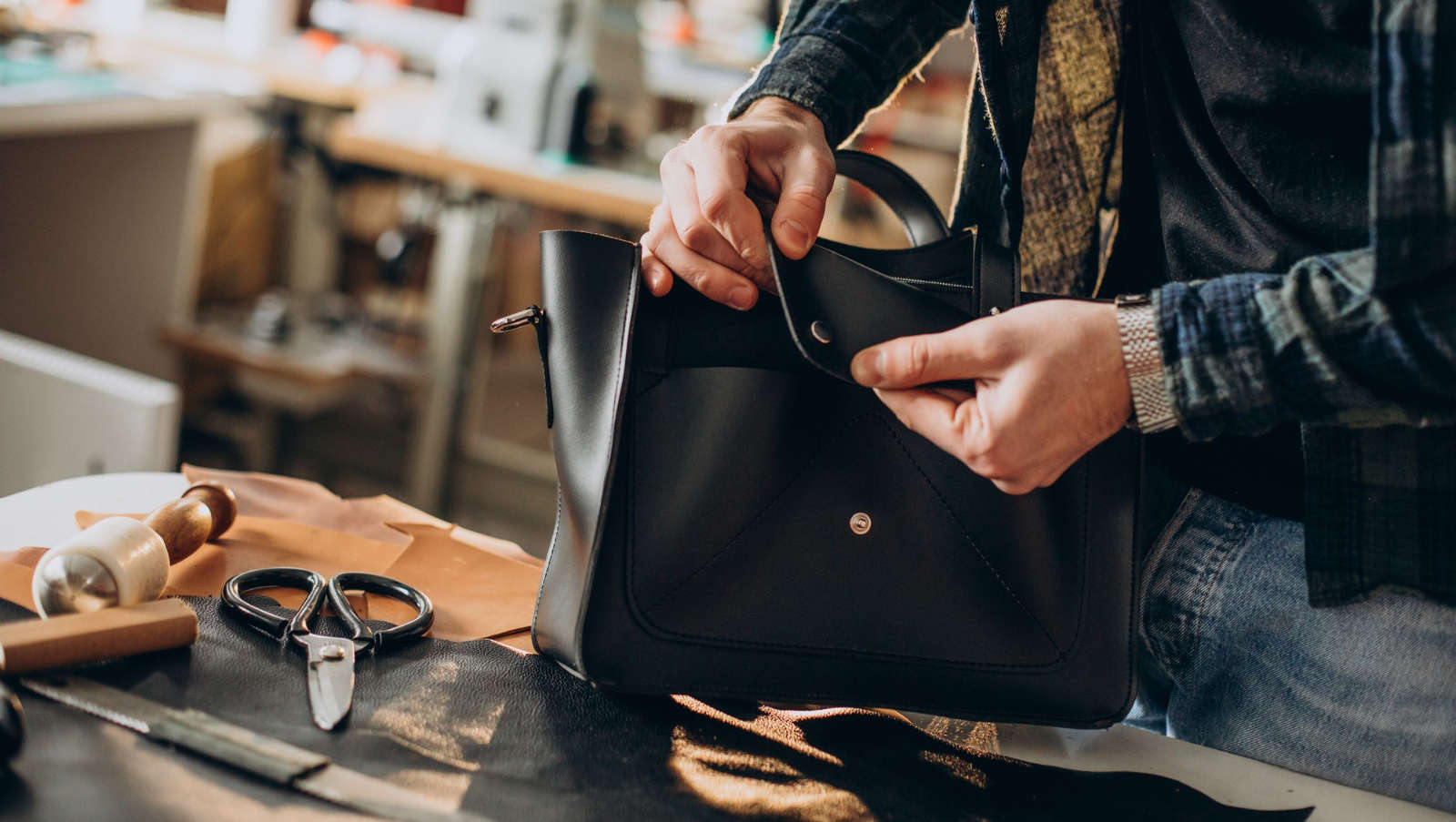
In leather processing, thinning can refer to two different operations. Trimming reduces the thickness locally, at the edges or in specific areas of the piece. Levelling, carried out technically by splitting, reduces and evens out the thickness across the entire surface of the material.
The two processes require different equipment. An inappropriate choice can result in edges that are difficult to fold, variations in thickness, repeated adjustments and material wastage.
In this article, we explain the difference between trimming and levelling machines and the criteria to consider before making a purchase.
What is the difference between trimming and levelling?
Trimming reduces the thickness locally, usually at the edges or in areas that are to be folded, sewn or glued. The operation is carried out using a bell-blade machine and can produce a straight, angled or profiled thinning, depending on the product.
Levelling reduces the thickness across the entire surface of the material or component. This technical process is called splitting and is carried out using a continuous band knife. The material can thus be reduced to a final thickness that is both thinner and more uniform.
A trimming machine does not replace a levelling machine, and vice versa. The choice depends on the area to be processed: just the edges and certain sections of the piece, or the entire surface.
Leather trimming and levelling machines are used in leather goods, footwear, upholstery and the automotive industries. Trimming prepares the edges of bags, wallets, belts, shoe uppers or upholstery components for folding, gluing and stitching. Levelling is used when the leather or components need to be brought to a consistent thickness prior to subsequent operations.
What type of equipment is required?
Operation | Equipment | Mechanism | Desired result |
Trimming | Trimming machine | Bell-shaped blade | Localised thinning at the edges or in specific areas |
Levelling | Skin levelling machine | Continuous band knife | Reducing and standardising thickness across the entire surface |
Selection criteria
The selection process begins with the required operation and the desired result. For trimming, the width, angle or profile of the cut and the remaining thickness in the processed area are important. For levelling, the final thickness, uniformity across the entire width and the maximum size of the material that can be fed into the machine are important.
Criteria | What needs to be checked |
Required operation | Local trimming or levelling of the entire surface |
Materials processed | Natural leather, synthetic materials, laminated materials, thickness, rigidity and elasticity |
Trimming result | Width, angle or profile, remaining thickness and edge finish |
Levelling result | Final thickness, tolerance and uniformity across the width of the workpiece |
Working width | Maximum size of workpieces to be trimmed or levelled |
Productivity | Feed rate, number of workpieces, set-up time and frequency of material changes |
Repeatability | Consistency of results across workpieces and batches |
Configuration | Feed rollers, press foot or bar, guides, extraction and accessories |
Installation | Power supply, compressed air where required, space, weight and access for maintenance |
Total cost | Consumables, wear parts, training, servicing and downtime |
The specifications in the catalogue must be confirmed by testing the materials actually used in production. Soft leather, stiff leather, synthetic materials and laminated materials may require different rollers, guides, feed speeds and settings.
The level of automation should not be chosen solely on the basis of production volume. The repeatability of operations, the variety of profiles, the frequency of adjustment changes and the required tolerances are also important factors. A programmable machine is particularly useful when the same profiles and results need to be reproduced consistently.
Common mistakes
- Trimming is often confused with levelling. A company may purchase a trimming machine, even though it needs to bring the entire workpiece to a constant thickness, or it may consider a levelling machine for an operation that applies only to the edges. The first step must be to define exactly the area to be processed and the desired result.
- The machine is chosen solely on the basis of price or maximum capacity. Working width and maximum speed alone do not indicate whether the equipment is suitable for production. What matters is set-up time, the variety of materials, changes between products, tolerances and the actual number of operating hours.
- The configuration is chosen without testing the materials. The result depends on the combination of the blade, the feed system, the clamping and guiding elements, the speed and the machine settings. Testing must be carried out on the materials actually used, including the most difficult-to-machine variants.
- The demonstration is carried out on a single sample. A piece that is easy to machine does not reflect the machine’s behaviour in actual production. The demonstration must include different thicknesses, stiffnesses and substrates, as well as changes to the settings from one material to another.
- Consumables and servicing are not taken into account. The investment is not limited to the price of the machine. The blades, sharpening system, rollers, clamping elements, filters, extraction system, wear parts, operator training and the availability of technical support must all be checked.
What should you check when the results start to vary?
Variations in thickness or uneven edges can have several causes: the condition and position of the blade, the sharpening system, material feed, the pressing and guiding elements, the extraction system, the machine settings, or variations in the material.
On a trimming machine, check the position and edge of the bell knife, the sharpening device, the support foot, the feed roller and the waste removal system.
On a levelling machine, the position and sharpness of the band blade, the feed system, the widthwise pressure, and the extraction of scrap and dust generated during sharpening should be checked.
Diagnosis must be carried out by successively testing and measuring the workpieces, not by assuming that the equipment has become out of calibration or that the sole cause is a worn blade.
Why must natural leather and synthetic materials be tested separately?
Natural leather can vary in density, elasticity and thickness even within the same piece. Synthetic materials may include a textile backing, foam, laminated layers or polyurethane or PVC coatings, and may behave differently during feeding and cutting.
The same settings do not guarantee the same result. When switching from one material to another, the feed speed, pressure, guides, blade position and resulting thickness must be checked.
Testing is also necessary between two materials in the same category if they have different thicknesses, finishes, backing materials or levels of elasticity.
Where do trimming and levelling fit into the production process?
The sequence of operations depends on the product and the surface to be processed.
Levelling can be carried out before cutting, when a larger surface area needs to be brought to the same thickness, or after cutting, if only certain components require a different thickness.
Trimming is usually carried out after the parts have been cut, on the edges or areas that are to be folded, glued or sewn. After trimming, the components proceed to the assembly operations.
The position of the equipment within the production flow must be determined based on the size of the parts, batch sizes, the frequency of setup changes and the subsequent operations. A high-performance machine can become a bottleneck if the feed rate and batch organisation are not adapted to its capacity.
Fortuna solutions distributed by Texco
Texco distributes the Fortuna range of leather trimming and levelling equipment, designed for applications in leather goods, footwear, upholstery and the automotive industry.
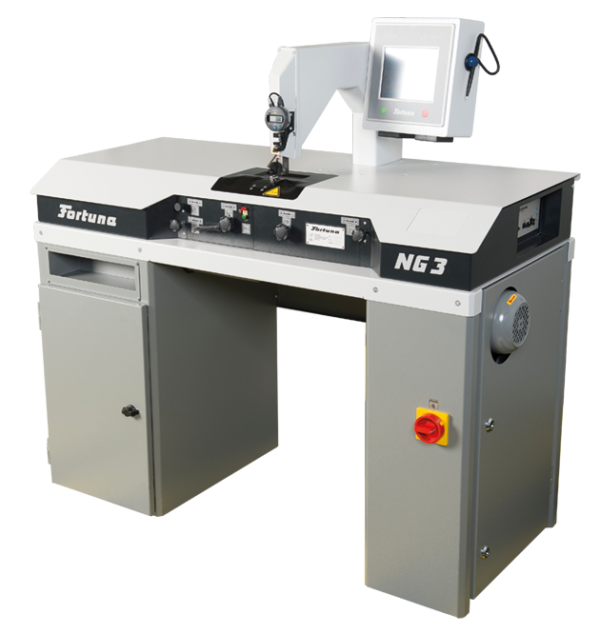
For trimming, the Fortuna range includes models such as the ES 50 and NG 3, used for footwear, bags, wallets, belts and other leather goods.
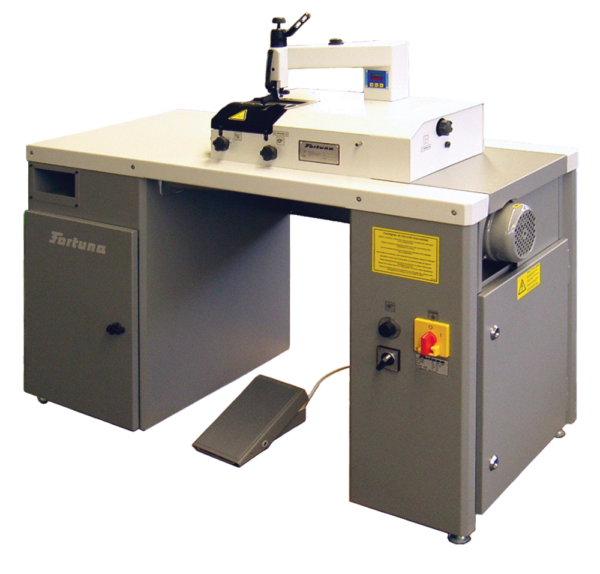
For levelling, the AN 400 and FSP Blueline 470 are examples of band knife machines used for leather and similar materials.
- Material splitting
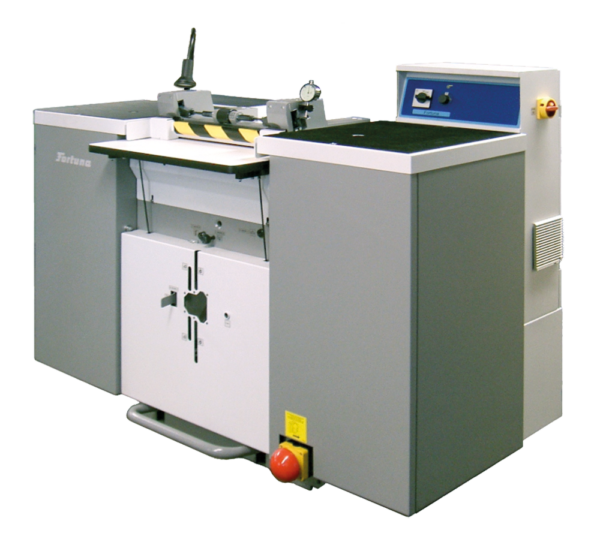
- Material splitting
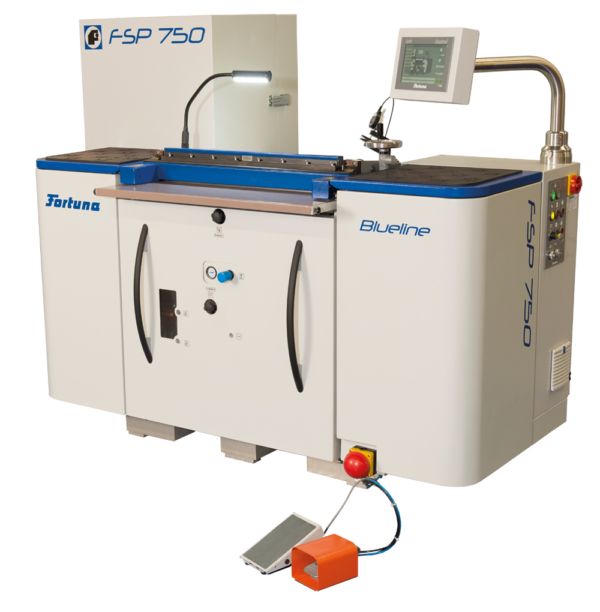
For automotive applications and larger workpieces, the range includes models such as the FSP 750.
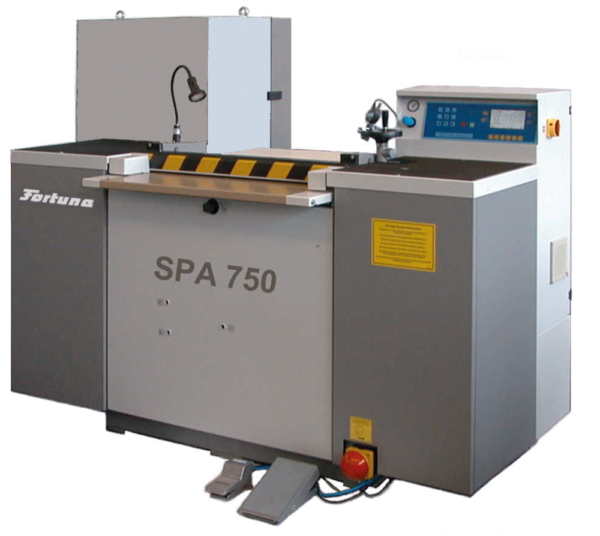
- Material splitting
The appropriate model is determined based on the materials being processed, the required width, the final thickness, the tolerances, the volume of work and the desired level of automation. Testing on the customer’s materials is required before a configuration can be recommended.
Frequently asked questions about leather trimming and levelling machines
What materials should be sent for a demonstration?
Send the materials you use most frequently, as well as the most difficult to process: the softest and stiffest leathers, extreme thicknesses, synthetic materials and laminated materials. The samples must reflect the actual variations encountered in production.
How do you objectively compare two machines?
Use the same materials, dimensions and outcome requirements. Compare the thickness or profile achieved, uniformity, repeatability, set-up time, working speed and the number of pieces requiring correction.
Which accessories can influence the result?
Feed rollers, press feet and bars, guides, profile accessories and the extraction system all influence material feeding and processing. The configuration must be established and tested alongside the machine.
What costs should be included in addition to the purchase price?
The budget must include blades, sharpening system components, feed rollers and feed elements, filters, wear parts, installation, operator training and servicing.
Is a separate extraction system required?
This depends on the model and the chosen configuration. It must be checked whether the removal of material scraps and dust generated during sharpening is integrated into the equipment or requires an external system, as well as what flow rate and connections are required.
The choice of a skiving or levelling machine should be based on the required operation, the materials being processed and the desired result, in addition to the machine’s capacity or price.
For trimming, the test should assess the profile, width, remaining thickness and edge appearance. For levelling, the thickness must be measured at several points to check for uniformity and repeatability between pieces.
The assessment must also include set-up time, material changes, consumables, installation requirements, operator training and service availability.
Request a demonstration using the materials employed in your production and a technical recommendation from the TEXCO team.